

What is Gated Content? A Practical Guide to Lead Generation
Think of gated content like the velvet rope outside a VIP lounge. To get past it, you have to offer something up—usually your email address or a credit card. This isn't about being exclusive for the sake of it. It’s a strategic trade.
Your audience gets access to your best, most valuable material—an in-depth guide, an exclusive webinar, a private community—and you get a qualified lead or a paying customer.
What Is Gated Content? A Clear Explanation
At its core, gated content is any digital resource a user can’t access until they take a specific action. That "gate" is almost always a form asking for contact info (like a name and email) or a payment page. It's the exact opposite of what you’re reading now—a blog post that’s open and free for anyone to see.
This simple value exchange is the engine behind countless successful online businesses. It's how you turn a casual browser into an engaged subscriber or a loyal member, opening up a direct line of communication you own. By placing your best work behind a gate, you're not just protecting it; you're signaling its premium value and filtering for an audience that’s genuinely invested in what you do.
To help you visualize the difference, here’s a quick breakdown of how these two content strategies stack up against each other.
Gated Content vs Ungated Content at a Glance
This table cuts through the noise and shows you exactly when and why you'd choose one approach over the other.
| Attribute | Gated Content | Ungated Content (e.g., Blog Posts) |
|---|---|---|
| Primary Goal | Lead Generation & Sales | Brand Awareness & Traffic |
| Audience Intent | High – actively seeking a solution | Low to High – browsing or researching |
| Key Benefit | Builds a direct audience (email list) | Drives SEO and organic discovery |
| Ideal Use Cases | E-books, courses, webinars, templates | Blog posts, public videos, infographics |
While ungated content casts a wide net to attract visitors, gated content is the tool you use to capture the most interested ones and begin a real relationship.
The Core Purpose of Gating
The goal isn't to hide information—it's to create a clear, intentional path for your most interested followers to go deeper. To really get this, it helps to understand the wider world of lead generation marketing, where capturing a prospect’s details is the critical first move in building a sales pipeline.
Gated content plays two key roles in this process:
- Lead Generation: You offer a high-value freebie—think an e-book, a checklist, or a webinar replay—in exchange for an email. This lets you build an audience you can nurture over time.
- Direct Monetization: You sell a premium product directly. This could be anything from an online course or a paid newsletter to access to an exclusive community. Your expertise becomes instant revenue. If you want to dive deeper into this model, our guide on content monetization breaks it all down.
For creators using a platform like Zanfia, this strategy is the foundation of a sustainable business. Zanfia works less like a plain course tool and more like an AI team that runs the business behind your gated content: you dictate the work by chat or voice, agents draft the offer, the checkout, and the follow-ups, and it all lands on courses, communities, and newsletters under your own domain. Blending free gated resources with premium paid products, you build a funnel that attracts new followers, nurtures their interest, and converts them at a checkout that supports order bumps, installments, and upsells—while Zanfia takes 0% platform commission on your customer sales.
The Two Core Types of Gated Content
Not every gate is built for the same reason. To get this right, you first need to understand the two fundamental types of gated content, because your choice will steer your entire strategy. Are you trying to grow your audience, or are you trying to generate direct revenue?
This simple chart shows how all your content can split down one of two paths—the wide-open highway of ungated content or the exclusive, members-only lane of gated content.
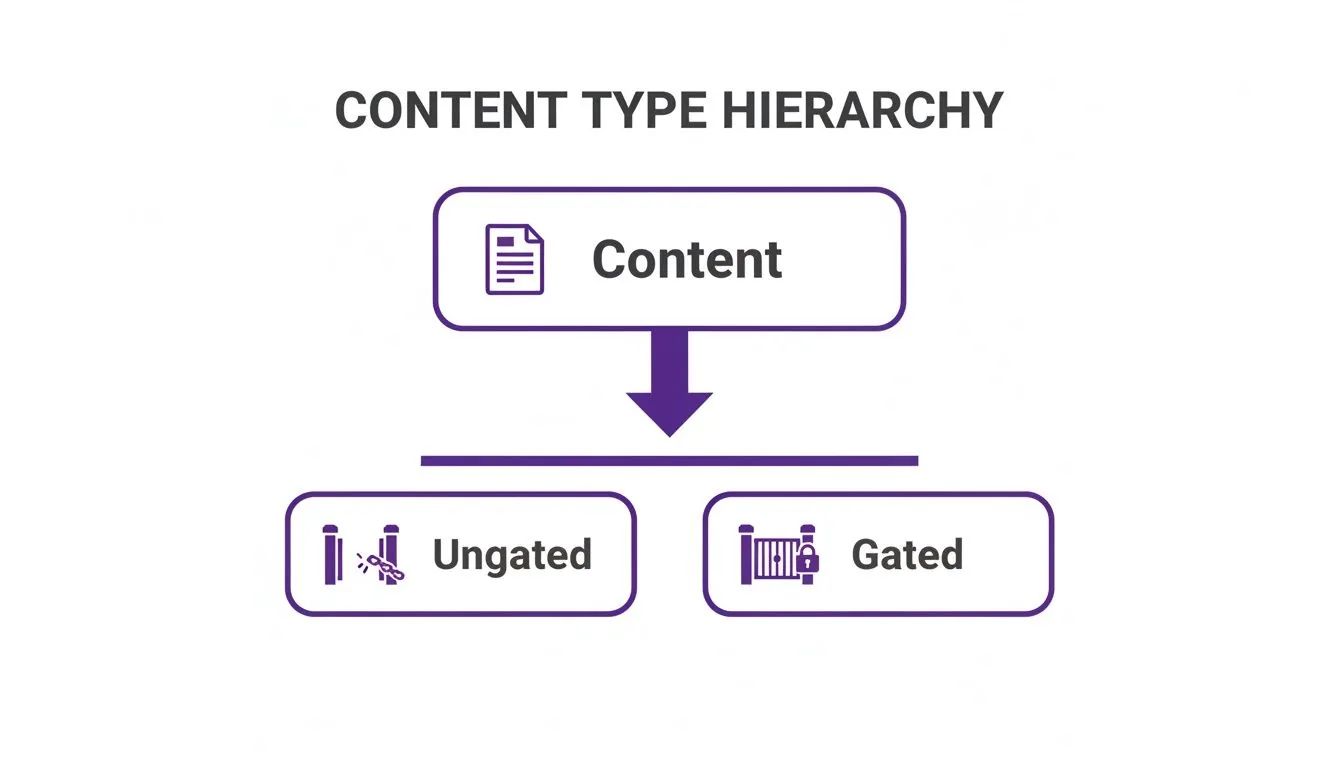
This just makes it clear that gating isn't random. It’s a deliberate choice you make to separate your most valuable assets from the free stuff you use to get discovered.
Lead Generation Gates
First up, we have lead generation gates. Their entire purpose is to build your audience. Think of it like the welcome desk at a conference—to get your name badge and access the main event, you have to give them your contact details first.
In the online world, that "badge" is a super valuable piece of content that you offer for "free" in exchange for an email address. This single move turns an anonymous visitor into a known lead, someone you can start building a real relationship with.
You see this all the time with content like:
- E-books and Guides: Deep dives that solve a very specific problem for your ideal customer.
- Webinars and Workshops: Live or recorded training sessions packed with expert insights.
- Checklists and Templates: Practical tools that make it easier for someone to get a task done.
The primary goal here is audience growth. You're essentially trading your expertise for permission to talk to potential customers directly, nurturing them until they're ready to buy.
This is the perfect play for creators who are just starting out or for anyone looking to seriously expand their reach before launching a paid offer. It fills the top of your marketing funnel with people who've literally raised their hands and said, "Hey, I'm interested in what you have to say."
Paid Access Gates
The second, more direct type is the paid access gate. This is where you shift from just building an audience to actually monetizing your expertise. The price of admission is no longer an email—it’s a payment.
This gate is what protects your most premium digital products and creates a real, sustainable revenue stream for your business. For creators building on an all-in-one platform, this is the core model. You aren't just collecting leads anymore; you're selling high-value digital goods and building a true community of paying customers.
The most common examples behind a paid gate include:
- Online Courses: Complete learning experiences with video lessons, assignments, and a space for community interaction.
- Paid Newsletters: Exclusive analysis and industry insights sent straight to paying subscribers.
- Membership Communities: Private spaces where members get access to exclusive discussions, events, and networking. You can dive deeper into building these in our guide to memberships and subscriptions .
For serious creators, this is the end game. Zanfia is built to make selling these products the easy part: you can package a course as a one-time purchase, split a $600 program into four installments at checkout, add an order bump on the way through, or bundle course, community, and ebook into one offer under a single brand. Zanfia currently charges 0% platform commission on your customer sales, so what your buyers pay lands with you, minus the standard payment processor fees.
How Gated Content Builds a Stronger Business
Choosing to gate your content is one of the most powerful moves you can make as a creator. It fundamentally changes the game from passively pushing content out into the void to actively building a real business asset: an engaged, committed audience.
When you put your very best work behind a gate, you’re creating a clear value exchange. That simple act strengthens your business from the inside out, starting with the quality of people you attract.
Establishing Authority and Monetizing Your Expertise
The most immediate win? A massive jump in lead quality. When someone is willing to hand over their contact info or pull out their credit card, they're sending a crystal-clear signal. These aren't just casual browsers; they're actively looking for answers you can provide, making them exponentially more likely to become loyal customers down the road.
Putting your premium content behind a gate also instantly frames you as an expert whose insights are truly valuable. It's a subtle but powerful psychological shift that reframes your knowledge from "helpful information" into a professional product worth paying for. This builds trust and solidifies your authority like nothing else.
For creators, this is the most direct path to turning expertise into actual revenue. Selling digital products—whether it's an online course, a paid newsletter, or a private community—transforms what you know into a reliable income stream.
This is where Zanfia earns its keep. The commission on your customer sales is currently 0%, so if you charge $200 for a course, $200 lands with you minus the payment processor’s standard fees. On top of that, your AI team is doing the work you would otherwise pay a small crew to do: drafting the sales page, wiring up the checkout with order bumps and installments, running a test purchase in test mode before launch, and following up with buyers—by chat or voice command, whichever way you prefer to work. For creators pulling four or five figures a month who are tired of watching commissions chip away at their margins, that combination of no platform tax and a working AI team is what makes scaling realistic.
Fueling Growth with Smarter Audience Segmentation
Beyond the direct sales, gated content is an incredible tool for getting to know your audience on a much deeper level. Every single download and purchase is a data point telling you exactly what people care about, which opens the door to powerful audience segmentation.
For example, you can create entirely different email lists based on who grabbed which freebie:
- Segment A: Downloaded your "Beginner's Guide to Podcasting." You can follow up with tips on choosing a microphone and later, an offer for your advanced "Podcast Monetization" course.
- Segment B: Bought your "Social Media Templates" e-book. This group is perfect for nurturing with content scheduling tips before introducing them to your exclusive marketing community.
This kind of targeted marketing is just so much more effective. You're no longer shouting the same generic message at everyone. Instead, you're delivering relevant, genuinely helpful follow-ups that speak directly to what each person needs, guiding them naturally through your marketing funnel. It's a smart way to nurture leads into high-value customers, and understanding the dynamics of customer retention versus acquisition costs really highlights how valuable this approach is long-term.
A Proven Strategy for Driving Real Conversions
The numbers don't lie: gated content is a serious driver of business growth. A recent B2B marketing study found that 62% of marketers see gated assets as their highest-converting formats. This is backed up by another massive analysis that saw a 71.4% year-over-year increase in e-book registrations—a clear sign that users are actively seeking out in-depth, valuable resources.
But here’s the real kicker: that same analysis found that people who registered for a white paper were 31% more likely to make a purchase decision within a year.
This shows a direct, measurable link between someone engaging with your high-value gated content and having a strong intent to buy.
For creators, that intent only turns into revenue if the checkout does its job. Zanfia’s cart is built for that moment: order bumps to raise average order value, installment plans that make a $500 course feel like $125, subscription upsells that turn a single sale into recurring revenue, and testimonials right on the checkout page. Offering premium content behind a gate isn't just a tactic for collecting emails—it’s a core revenue strategy, and pairing it with a checkout designed to sell is what closes the loop between content consumption and payment.
Choosing What Content Is Worth Gating
Figuring out what to put behind a gate is where your strategy really comes to life. It all boils down to a simple, crucial question: is what you’re offering valuable enough to make someone act? Not everything you create is worth gating. We're talking about finding the crown jewels in your content library—the stuff so good, so compelling, that your audience will happily trade an email address or pull out their credit card to get it.
The trick is to reserve gating for your most comprehensive, exclusive, and actionable material. A quick blog post? Not a great candidate. A complete online course that teaches a marketable skill? That’s exactly what we’re looking for. Think of it this way: your free, ungated content answers the "what," while your premium, gated content delivers the "how."

A Framework for Gate-Worthy Content
Before you even think about putting up a form, run your content idea through this simple checklist. Truly valuable gated content should tick most, if not all, of these boxes.
- Solves a Major Problem: Your content needs to hit a real nerve. It must address a significant pain point for your audience with a deep, focused solution, not just a generic overview.
- Offers Uniqueness and Exclusivity: Can someone find this same information with a quick Google search? If so, don't gate it. Your offer has to feel special, whether it’s because of your original research, a proprietary framework, or your one-of-a-kind expert perspective.
- Is Highly Actionable: The best-gated content isn’t just informative; it’s a toolkit. It gives users templates, step-by-step video tutorials, or detailed guides they can immediately put to use to get a real result.
- Demonstrates Significant Depth: A 500-word article is great for grabbing attention. But a 10-module video course or a 50-page e-book is what creates customers. The sheer effort and depth signal its premium value from a mile away.
This framework is about shifting your mindset from just sharing information to creating genuine business assets. For a deeper dive, check out our guide on how to create lead magnets that turn casual visitors into loyal subscribers.
Prime Candidates for Gating in Your Business
So, what does this look like in the real world for creators? Some content formats are just natural fits for gating because their perceived value is already sky-high. Zanfia lets you sell 12 different product types under one brand—courses, communities, paid newsletters, memberships, knowledge bases, ebooks, digital downloads, services, events, consultations, bundles, and custom products—so you can gate more than one of them without stitching together separate tools.
Let’s look at the top contenders:
- Comprehensive Online Courses: This is the ultimate gate-worthy asset. Zanfia includes native video hosting, so you can build a high-end learning experience without paying separately for Vimeo or Wistia, and describe the whole course to your AI team by voice instead of clicking through a builder.
- Paid Newsletters with Exclusive Analysis: If you’re offering insights your audience can’t find anywhere else, a paid newsletter is a fantastic recurring revenue stream. It’s a promise of consistent, exclusive value delivered right to their inbox.
- Private Membership Communities: Never underestimate the value of access—to you and to a network of like-minded people. Gating a community creates a focused, high-engagement space where members feel like they're part of something special, and Zanfia keeps everything unified under your brand, boosting retention.
- In-Depth E-books and Digital Guides: The classic, well-researched e-book that serves as the definitive guide on a topic is still incredibly effective. It’s a perfect asset for both generating leads and making direct sales.
Tapping Into Market Demand with Specialized Content
The appetite for specialized, high-value content is exploding, especially in fast-moving fields. One industry report, for instance, found that the demand for AI-related content shot up by a staggering 186% year-over-year. This shows just how powerfully a targeted, valuable asset can capture market interest.
It signals a major shift: audiences are getting pickier. They will gladly give you their information or money in exchange for content that solves a specific, urgent problem. By creating premium, specialized content, you can tap directly into this trend and see much higher engagement and conversion rates.
The data is clear: buyers aren't just consuming more content; they're actively seeking deeper, authoritative resources that solve their specific professional challenges.
For creators using Zanfia, this is a massive opportunity. When you build a high-value online course or an exclusive community around a niche topic, you’re positioning your business to meet this demand head-on—and your AI team keeps the sales page, the checkout, and the follow-up sequence in sync while you focus on the content itself.
Putting Your Gated Content Into Action with Zanfia
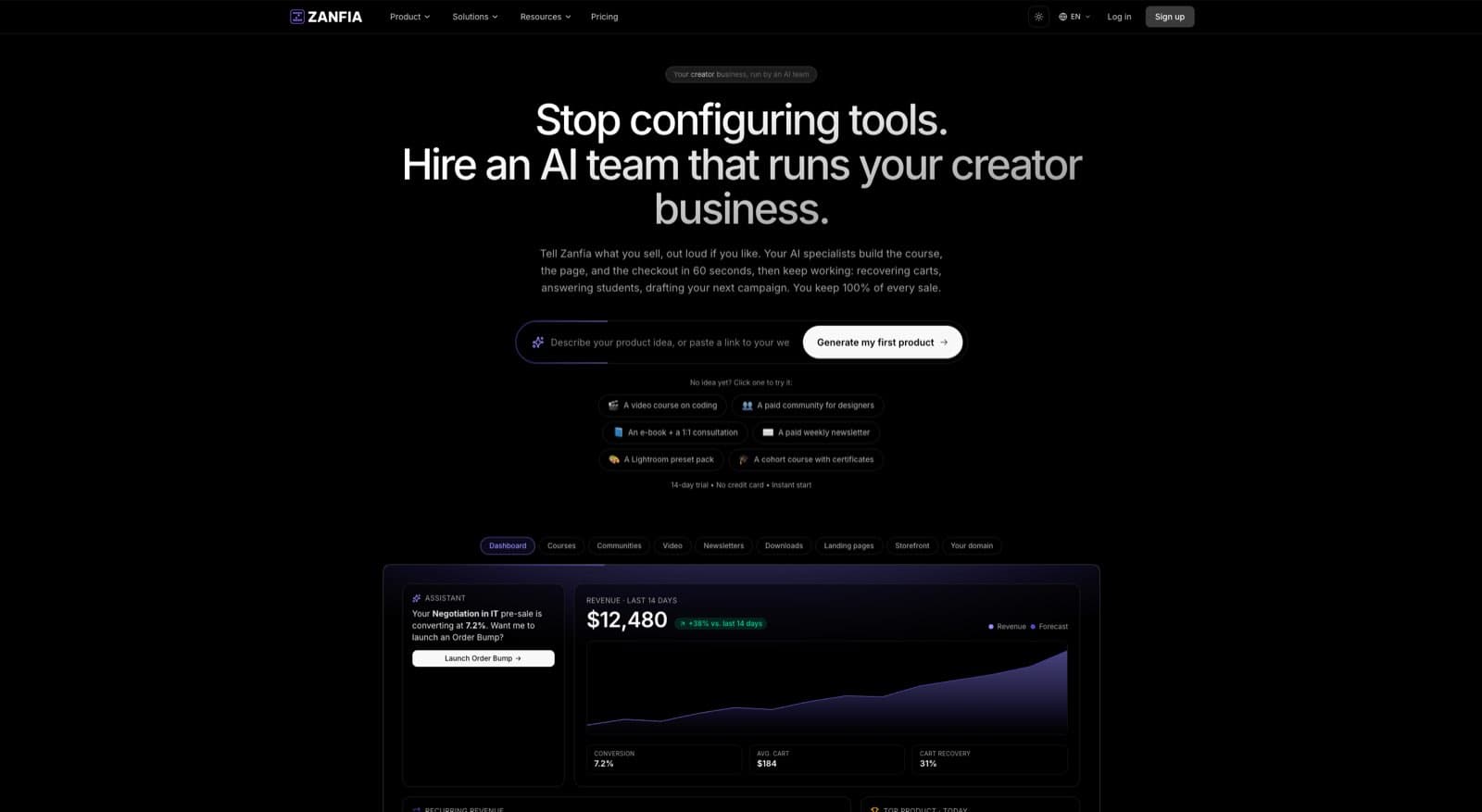
Knowing the theory is one thing, but actually building your business is what counts. With Zanfia, most of the setup is a conversation: you tell the AI team what you want to sell, by chat or by voice, and it drafts the product, the checkout, and the follow-ups for you to review. No juggling plugins, no stitching payment gateways together—it’s all handled in one workspace, and anything you can do in the interface can also be triggered through the MCP endpoint by your own AI assistant (available on higher plans, see the current Zanfia pricing).
Let's walk through how to set up three of the most popular types of paid gated content and turn your expertise into a real product.
Scenario 1: Selling a Digital Download
Let's say you’ve written a killer e-book or designed a premium set of templates. With Zanfia, you can have it up for sale in minutes, not days. The platform is built from the ground up for digital goods.
You just create a new product, upload your file, and name your price—or dictate the whole setup to your AI assistant and let it draft the product page and checkout for you. Zanfia takes care of the rest, from the secure checkout page to instantly delivering the download the moment a payment goes through. You can offer flexible pricing, like a one-time fee, or break a bigger-ticket item into installments so a $300 template pack goes out as four payments of $75 instead of a single hit.
Before your first real customer sees it, you can run a test purchase through the same checkout in test mode. The order is tagged TEST in the events log, GA4 and your Meta or TikTok pixel fire on their test surfaces, and nothing pollutes your real sales data. You catch a broken thank-you page or a mistyped price yourself instead of hearing about it from a buyer.
Scenario 2: Launching a Paid Community
Building a private community is one of the smartest ways to generate recurring revenue and forge real connections with your audience. Zanfia makes this feel effortless by keeping your community, courses, and products under the same roof, which makes your brand look so much more professional.
To set it up, you create your community space and organize it with dedicated channels. Then, you link access to a specific subscription plan. When a new member signs up and pays, Workflows kick in and instantly grant them access to the right channels—the same triggers can add or remove them from Discord roles or Circle spaces if you’re already using those tools.
This all-in-one approach is a massive win over platforms that force you to send your members out to a separate Discord server or Facebook Group. Keeping everyone on your own domain dramatically boosts engagement and member lifetime value, and Zanfia’s community can include an AI agent that answers members using your own content (and clearly labels everything it publishes as AI). When a subscription ends, the same automation revokes access, keeping your premium space exclusive to paying members. If you want to dive deeper, our guide on how to sell digital products online is packed with more strategies.
Scenario 3: Creating a Premium Online Course
For many creators, online courses are the main event. Zanfia is loaded with features to make yours look and feel incredibly professional. The platform includes native video hosting, which means you can ditch expensive third-party services like Vimeo or Wistia, while still supporting integrations if you need them.
You can structure your course with clean modules and lessons, upload videos directly, and attach materials like worksheets or quizzes. Zanfia's smart video player even automatically saves where each student left off, creating a smooth, high-end learning experience. And because the AI assistant can perform any action available in the interface, you can dictate a whole module outline—titles, lesson order, drip schedule—instead of clicking through it yourself.
When it comes to getting paid, you have plenty of options:
- One-Time Purchase: Give lifetime access for a single payment.
- Subscription Plan: Offer ongoing access for a recurring monthly or yearly fee.
- Installment Plans: Split a $600 course into four payments of $150 to make bigger tickets easier to say yes to.
- Order Bumps and Upsells: Add a workbook at checkout, or offer community access as a subscription upsell on the way through.
- Product Bundles: Package your course with community access or an e-book to create an irresistible high-value offer.
This kind of flexibility lets you meet your customers where they are and maximize your sales. Zanfia currently charges 0% platform commission on your customer sales, so aside from the standard payment processor fees, what your students pay for the course lands with you.
Promoting Your Gated Content for Maximum Reach
Look, creating a fantastic piece of gated content is a huge win. But that’s only half the job. Even the most brilliant online course or a game-changing e-book is useless if nobody ever sees it. Promotion is the critical step that connects your hard work with the people who actually need it.
Think of your gated content like a product launch. You need to give it the same level of care and attention. That means building a dedicated landing page, nailing the value proposition, and hitting multiple channels to get the word out. This is how you make sure all that effort pays off.
Build a High-Converting Landing Page
Your landing page is the digital handshake. It has one single, solitary job: convince your visitor to sign up. Every headline, every image, and every word needs to work together to build trust and scream value, eliminating any reason for them to click away.
The key is focus. You need one crystal-clear call-to-action (CTA). No confusion. Something direct like "Download the Guide" or "Enroll Now" tells people exactly what to do next.
Here’s what every killer landing page needs:
- A Powerful Headline: You have seconds to grab their attention. Make it count by stating the biggest benefit they'll get.
- Compelling Copy: Don't write a novel. Use short paragraphs and bullet points to quickly explain what it is, who it's for, and the specific pain point it solves.
- Social Proof: Nothing builds trust faster than hearing from happy customers. Zanfia lets you show a gallery of approved testimonials right on the checkout page, so the same voices that sold them on the landing page reappear at the moment they’re pulling out a card.
- Clean Visuals: Show, don't just tell. Use a high-quality mockup of your e-book cover or a slick preview of a course video.
Leverage Your Existing Content Channels
All that free content you’re already creating—your blog posts, your social media updates—is the perfect on-ramp to your premium stuff. You’ve used it to build trust and attract an audience, so now it’s time to guide them to the next step.
Don’t just hope they find it. Strategically place CTAs inside your most popular blog posts that point to a relevant gated offer. For example, after a killer post on "5 Tips for Beginner Photographers," you can pop in a banner that says, "Ready to go deeper? Download our Ultimate Guide to Mastering Your DSLR."
The real pro move here is to make sure the free content and the gated offer are perfectly aligned. You’re creating a seamless journey, taking someone from casual interest to deep engagement by offering them the logical next step.
Use Email to Nurture and Convert
Your email list is pure gold. These aren't cold leads; they’re people who already know, like, and trust you. This is your most powerful tool for building hype and driving action for your new gated content.
Don't just drop it on them out of nowhere. Start with a teaser campaign. Send a few emails hinting at what’s on the way and why it's going to be so valuable. When you launch, send a dedicated announcement with a big, bold link to your landing page. You can even create a special, limited-time offer just for your subscribers to reward them and light a fire of urgency.
Frequently Asked Questions About Gated Content
As you start exploring this strategy, a few key questions always seem to come up. Let's dig into the most common ones so you can move forward with confidence.
Will Gating My Content Hurt My SEO?
This is a totally valid concern, but the short answer is no—not if you do it right. While search engines can’t crawl and index the amazing content tucked behind the gate, the landing page you use to promote it is completely visible and can be optimized to rank.
A smart strategy uses a mix of both. You create fantastic, free-to-read blog posts that attract organic traffic and build your authority. Then, within that content, you naturally guide readers toward your premium gated asset, using the landing page as the bridge from public to private.
How Many Form Fields Should I Use?
The perfect number of fields comes down to one thing: the value exchange. Are you offering a simple checklist? Just an email address is probably all you need to maximize sign-ups. Fewer fields mean less friction.
But if you're offering something with more weight, like a deep-dive industry report or an exclusive webinar, asking for a name or company size can help you understand who's downloading your stuff. It helps qualify your leads.
The golden rule here is to only ask for the information you will actually use. Always start with the bare minimum and test adding more fields later. See how it affects your conversion rates for that specific offer.
When Is It Better to Not Gate Content?
You should leave content open and free when your main goal is getting as many eyes on it as possible. Think brand awareness, reach, or search engine visibility. Foundational blog posts, general how-to articles, and product feature pages should always be ungated to attract the widest audience.
Picture it like a funnel. Your public content sits at the top, drawing people in. Gating works best for the high-value, in-depth resources that are the logical next step for someone who’s already engaged and ready to go deeper. A successful creator masters both, using free content to build an audience and gated content to convert that audience into loyal customers.
Ready to turn your expertise into a business without giving away your profits? Zanfia is an AI team that runs your creator business: you dictate the work by chat or voice, agents build the courses, communities, and digital products, and it all lands on a checkout designed to sell with order bumps, installments, and upsells. Zanfia currently charges 0% platform commission on your customer sales, and every plan starts with a 14-day free trial, no credit card required. Explore Zanfia and see how easy it can be.